Introduction
Water is one of the most vital resources in your home — from drinking and cooking to showering and laundry. If you’re in the Ottawa region (including Metcalfe, Greely, Russell, Manotick, or rural surroundings), the quality of your water can vary depending on whether you’re on municipal supply or a private well.
At Honest D Plumbing, we help homeowners select, install and maintain water treatment systems that match their home’s needs and water conditions. In this guide, we’ll walk you through how to choose the right system for your home, what factors to consider, and why getting this right matters.
1. Understand Your Water Source & Current Quality
The first step in choosing any water treatment system is to know where your water comes from and what issues it may have.
- If you are on municipal water in Ottawa or the surrounding municipalities, your water is already treated to meet federal and provincial standards. Government of Canada+1
- If your home is using a private well, lake or river supply, the risk of contaminants — such as bacteria, sediment, iron, manganese, hard water minerals — is higher. Government of Canada+1
- Even with municipal supply, there can still be issues such as taste/odour (chlorine), lead from older pipes, or hardness and sediment as water travels through aging infrastructure. The Home Depot Canada+1
- Have your water tested. This gives you a clear baseline of what your home’s water contains — that enables a tailored treatment approach rather than guessing.
2. Identify What Problems You Are Trying to Solve
Once you know your water source and have a test, ask: What specific issues do we want to address? Below are common issues in the Ottawa area:
- Hard water: high levels of calcium and magnesium causing scale buildup on fixtures, appliances, and reducing efficiency.
- Sediment, rust or iron/manganese: particularly in older homes, or homes with well/well-water systems.
- Taste & odour problems: chlorine from municipal supply, organic matter causing musty smell, or well water with sulphur/rotten-egg smell.
- Microbial or bacterial risk: more relevant for wells. Houses in rural settings often benefit from UV or strong disinfection because municipal pathogens control may not apply. MT Treatment+1
- Specific contaminants: lead, heavy metals (in older piping), volatile organic compounds (VOCs) or nitrates (especially in agricultural/rural settings).
3. Determine the Type of System You Need: Point of Entry vs Point of Use
Water treatment systems fall into broad categories based on where they treat water.
- Point of Entry (POE) or whole-house systems: Installed at the main water line entering your home. They treat all water used in the home — showers, taps, appliances. This is beneficial if you want protection for plumbing, fixtures, appliances and for bathing/cleaning as well as drinking. Enercare+1
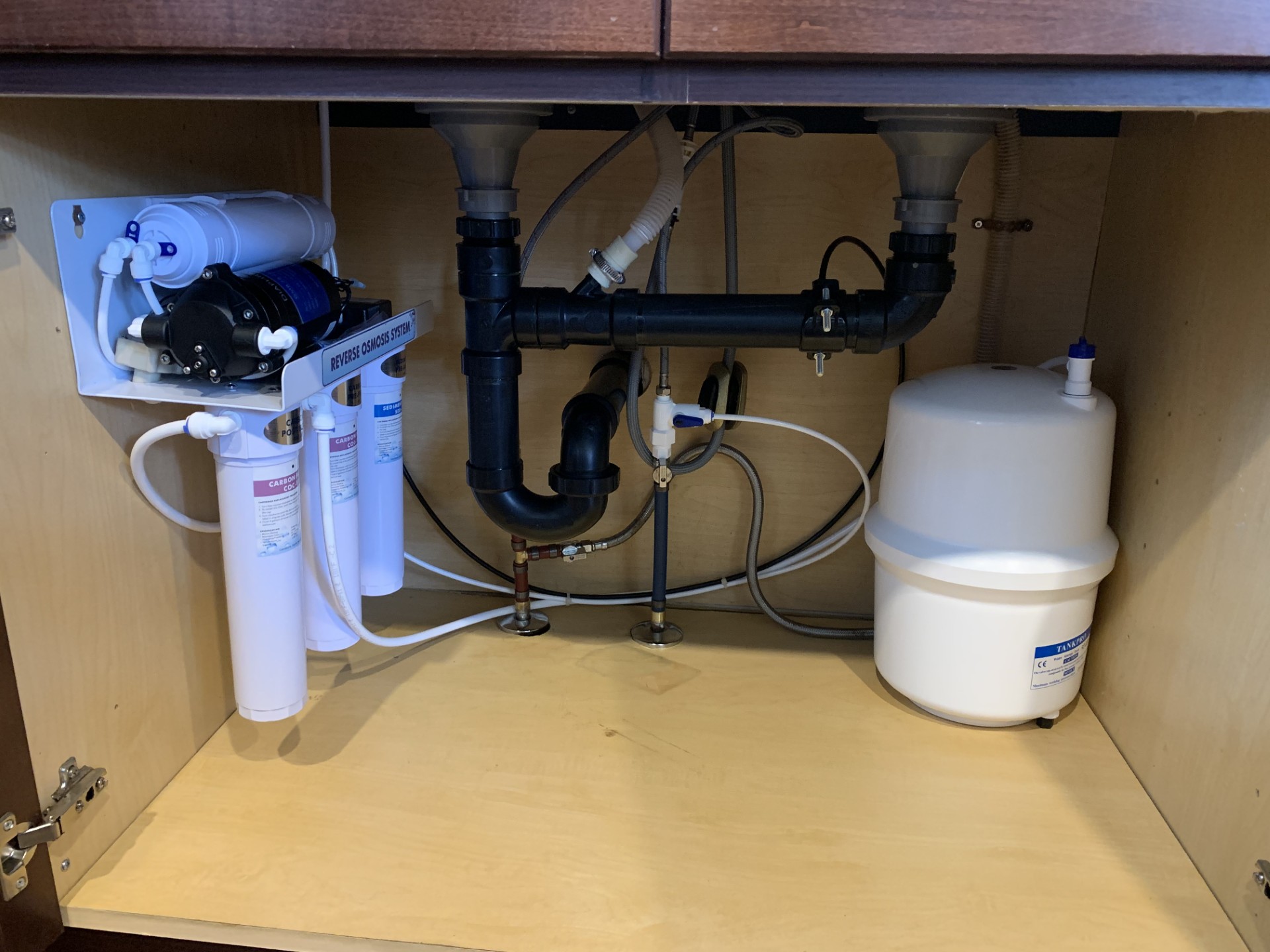
- Point of Use (POU) systems: Installed at a specific tap or location (e.g., kitchen sink, refrigerator). They treat water only at that outlet, and are common for drinking/cooking water solutions like under-sink filters, reverse osmosis systems. airandwatercare.ca+1
Which do you choose? It depends on your budget, your issues, and how broad you want the treatment to be.
4. Know the Common Types of Treatment Technologies
Here are some of the most common treatment technologies you’ll encounter, with what they address and what to watch for:
- Activated Carbon Filtration: Removes chlorine taste/odour, some organic compounds, improves taste. Good for municipal water where the main issue is taste/odour. MT Treatment+1
- Water Softeners (Ion Exchange): Remove hard-water minerals (calcium, magnesium) by exchanging sodium or potassium ions. This helps with scale, extends appliance life, improves soap/cleaning performance. MT Treatment
- Reverse Osmosis (RO): Very fine filtration that removes dissolved solids, heavy metals, nitrates, etc. Often used under-sink for drinking water. Enercare+1
- Ultraviolet (UV) Disinfection: Uses UV light to kill bacteria, viruses, microbial pathogens. Especially relevant for homes with wells or microbiological risk. MT Treatment+1
- Whole-House Sediment/Fe/Iron Filters: Remove particles, rust, iron/manganese, protecting plumbing and improving clarity. The Home Depot Canada
5. Match the System to Your Home’s Needs
With your water test results and list of issues, match the system features to your home situation:
- If your home has hard water (scale on fixtures/appliances) → consider a water softener + sediment filter for POE.
- If your drinking water tastes or smells off (municipal or well) → consider a POU system under-sink or an RO/Carbon combo.
- If your home is on a well and microbial contamination is a risk → consider UV disinfection + whole-house or pre-filter system.
- If you want whole-home protection (bathrooms, washing machine, taps, plumbing) → invest in a POE whole-house system rather than just under-sink.
- Consider budget, maintenance, space: some systems require regular filter changes, salt (for softeners), power (for UV), and adequate space for installation.
6. Think Long-Term: Maintenance, Certification & Total Cost
Choosing a system isn’t just buying and installing — you need to consider ongoing maintenance and certification for Canadian homes:
- Make sure the system is certified to recognized standards. For example, in Canada, treatment devices should be certified to NSF/ANSI standards such as 42, 53, 55, 58. Government of Canada+1
- Maintenance: Filters need regular replacing; softeners need salt; UV lamps need annual replacement; whole-house systems may need servicing.
- Total cost: Consider upfront cost + installation + replacement parts + operation (salt, electricity for UV, etc.). Some systems pay off via reduced appliance repair and longer life. airandwatercare.ca
- Installation by a professional counts: a poorly installed system may underperform, cause pressure drop, or void warranties.
- Warranty and support: Choose systems backed by reputable brands and local installer support (for you in the Ottawa area).
7. Why Honest D Plumbing Is Your Ideal Partner
At Honest D Plumbing, we bring local Ottawa-area expertise, especially for homeowners in Metcalfe, Greely, Russell and the surrounding rural zone. Here’s why many clients trust us:
- We begin with a full water-quality assessment — no “one size fits all” systems.
- We evaluate your home’s supply source (municipal vs well), plumbing layout, usage patterns and budget.
- We help you understand their unique needs (e.g., well water microbial risk, hard water, taste issues).
- We install certified systems properly, integrate them with your plumbing, and provide documentation and guidance for maintenance.
- We offer ongoing support so you’re not left on your own with complex systems.
8. Steps to Take: Your Water Treatment System Plan
Here’s a practical step-by-step plan for you to follow:
- Schedule a water test — either via your municipality (for municipal supply) or via a private lab for well water. Check for hardness, iron/manganese, bacteria, nitrates, taste/odour parameters.
- List the problems you currently have — e.g., “scale on taps”, “orange staining”, “musty odour”, “hard water soap residue”, “low pressure after filtering”.
- Decide on scope — do you want just drinking/cooking water improved (POU) or your entire home’s water (POE)?
- Set budget & timeframe — installations can vary widely in cost depending on type and complexity.
- Contact Honest D Plumbing for a consultation — we’ll analyse your test results, walk you through options, compare maintenance and cost implications, and provide a quote.
- Install system — we handle installation, commissioning, explain maintenance (filter changes, salt, lamp replacement) and set you up for long-term success.
- Track performance — monitor how your water quality improves, check your appliances and fixtures for scale/residues, and schedule regular maintenance.
9. Common Questions Homeowners Ask
Q: Does my home really need a treatment system if I’m on municipal water?
A: Possibly yes — municipal water meets health standards but doesn’t always address taste/odour issues, lead in older indoor plumbing, or specific homeowner concerns. Testing will clarify. Government of Canada
Q: Can I install something myself to save money?
A: For some simple under-sink filters yes. But for whole-house systems, well water disinfection (UV), or systems tied into your home plumbing, professional installation ensures correct sizing, compliance, and warranty protection.
Q: How often do I need to maintain the system?
A: Depends on the system: Filters may need replacement every 6-12 months, UV lamps yearly, softener salt monthly/quarterly, system checks annually. Budget for ongoing maintenance when choosing.
Q: If I have hard water, should I go for softener or filtration?
A: Softener handles mineral hardness (calcium/magnesium). Filtration may address other concerns like iron, odour or contaminants. Often a combined approach is best if you have multiple concerns.
Conclusion
Choosing the right water treatment system for your home in the Ottawa area is about matching your water quality, your home’s plumbing and your budget. With the right professional partner — like Honest D Plumbing — you can ensure you get the proper system, installed correctly, maintained and delivering reliable water quality for years to come.
Call-to-Action
Ready to improve your home’s water quality and peace of mind? Contact Honest D Plumbing today at (613) 229-8361 or email honestdplumbing@gmail.com to schedule your water-quality assessment and consultation. Let’s find the right water treatment solution for your home.